KITCHEN DISPLAY
Kitchen display system for Ghana restaurants
A kitchen display system (KDS) is a screen in the kitchen that shows incoming orders in real time, replacing paper dockets clipped to a rail or shouted across a pass. Obali TableKare's own KDS is built into the same offline-first system as the till and the Obali TableKare restaurant POS it runs alongside, so every order, however it was placed, lands on the same screen the moment it fires.
What a KDS does
When a server fires an order at the till, or a guest sends one from the QR menu, a ticket for that table appears on the kitchen screen immediately: no walking a slip over, no waiting for someone to notice a printer jammed. Each ticket carries a prep timer that starts the moment it lands, so the kitchen can see at a glance how long an order has been sitting. Allergy notes and modifiers ("no pepper", "extra plantain", "well done") show directly on the ticket itself, attached to the item they belong to rather than scrawled in the margin of a paper docket.
If a ticket sits too long, it's flagged as overdue so it doesn't get lost among newer orders during a rush. And because stock control and the kitchen display share the same system, an item that was actually out of stock but still got fired shows up flagged as 86'd on the ticket, rather than the kitchen finding out only when someone goes looking for an ingredient that isn't there. Orders from the till and orders from the QR customer menu land in one unified kitchen queue, not two separate screens the kitchen has to check, so a table that ordered from a phone and a table a server rang up in person show up exactly the same way.
Why it matters in Ghana
Ghana's power supply isn't always reliable, and dumsor can hit mid-service without warning. A kitchen display that depends on a live internet connection is a kitchen display that goes dark at exactly the wrong moment. Obali TableKare's KDS keeps working through a power cut and a dropped connection alike, because tickets are written to the device the instant an order fires, not fetched from somewhere else each time the screen refreshes.
The other failure mode a screen fixes is more mundane but just as costly: paper. In a loud, busy Accra or Kumasi kitchen during a dinner rush, a docket can get soaked, smudged past reading, or simply fall behind a station and go missing. By the time anyone notices, a table has been waiting twenty minutes for a dish nobody started. A screen doesn't get lost, and a ticket that's overdue says so.
None of this is unique to Accra. Kitchens in Kumasi and other second-tier Ghanaian cities deal with the same paper-ticket clutter and the same patchy connectivity as anywhere else. This isn't a problem confined to one city, and a kitchen display built to work offline is built for exactly that kind of kitchen, wherever it happens to be.
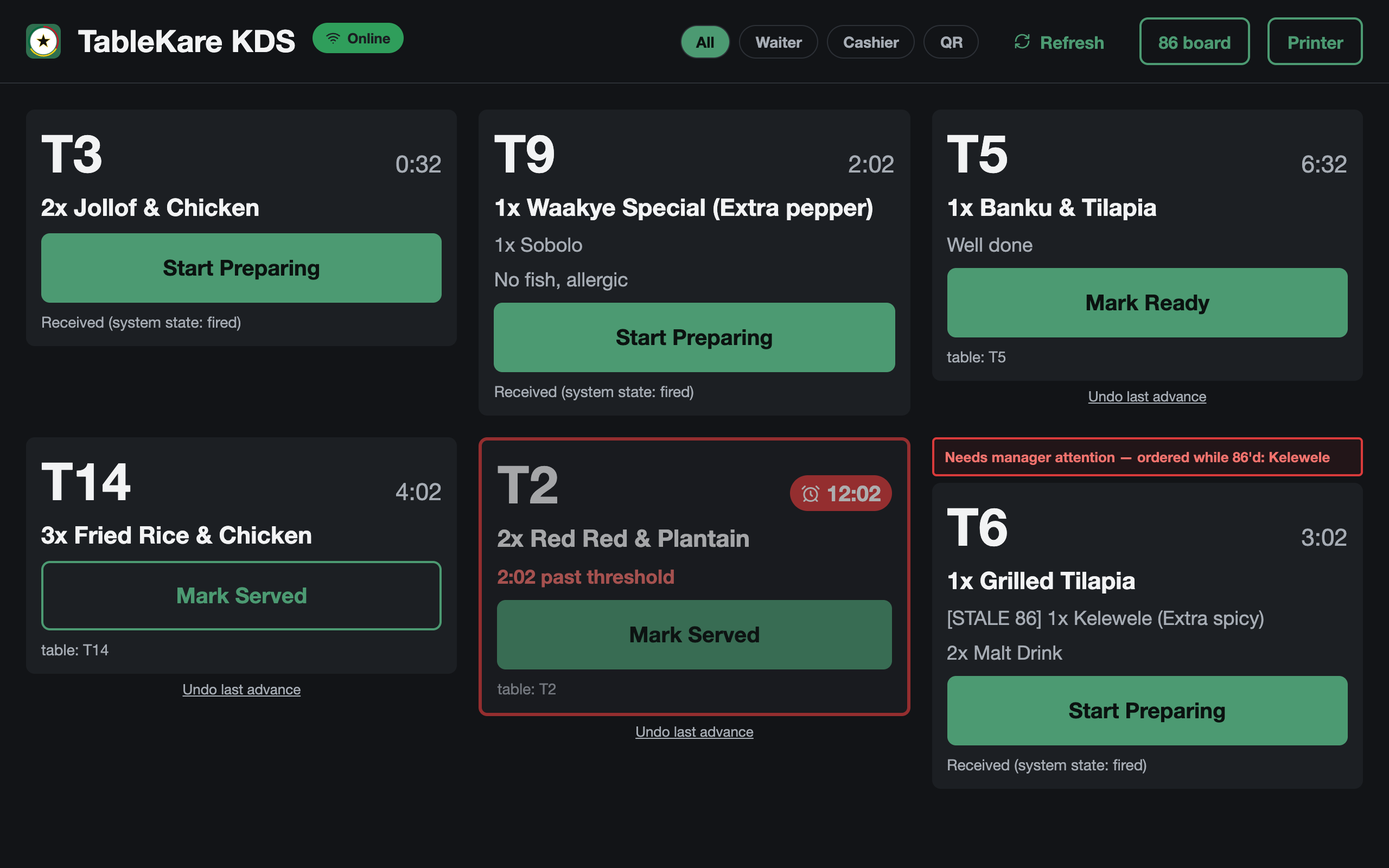
The kitchen display is one part of a larger restaurant POS built for Ghana, alongside the till, QR ordering and stock control with auto-86. If you'd rather see it move than read about it, see the kitchen display in the live demo with sample orders, or compare notes on GRA E-VAT receipts for the full picture of what Obali TableKare covers.
Watch tickets land on the kitchen screen in real time.
Fire an order in the live demo and watch it appear on the kitchen display with its own timer, or join the pilot to bring it into your own kitchen.